
Innovation in the Hotel Industry: The First Novotel Living in the Baltics by Estmak Capital
The travel and real estate sectors have undergone a quiet reshaping over the past decade. Extended business trips, flexible work arrangements, and changing expectations all led to the rise of a new kind of temporary living. In Tallinn, these global forces are taking a visible new form: Novotel Living, a project by Estmak Capital that combines the familiarity of home with the simplicity of a hotel. Due for completion in November 2025, it will be the first of its kind accommodation in the Baltic states region.
Global Shift in the Hospitality Sector
Before the pandemic, hotels were still largely built on short stays and quick turnover. That model began to strain when more guests started needing space, literally and figuratively. Whether for work, study, or extended family visits, more people were staying longer and seeking accommodation that felt more grounded.
The demand brought new life to terms like “aparthotel” and “serviced apartment.” Hybrid formats began to fill the gap: places that offered the functionality of a home, combined with the predictability and infrastructure of a hotel. For hotel operators and city developers alike, this wasn’t just a niche — it's become a defining shift.
What Is Novotel Living
Novotel Living, developed under the Accor Group, fits directly into this new space. Its concept builds around extended stays — accommodations that allow people to live more normally, even when far from home. Compared to traditional hotel rooms, a part of the unit at Novotel Living features a full kitchen, a living area, and ample storage space. However, it’s still part of a hotel, meaning services like cleaning, fitness access, and community interaction remain available.
Tallinn will soon join the list of cities hosting this format, becoming the first in the Baltic region to introduce Novotel Living under the global brand.
Project Highlights
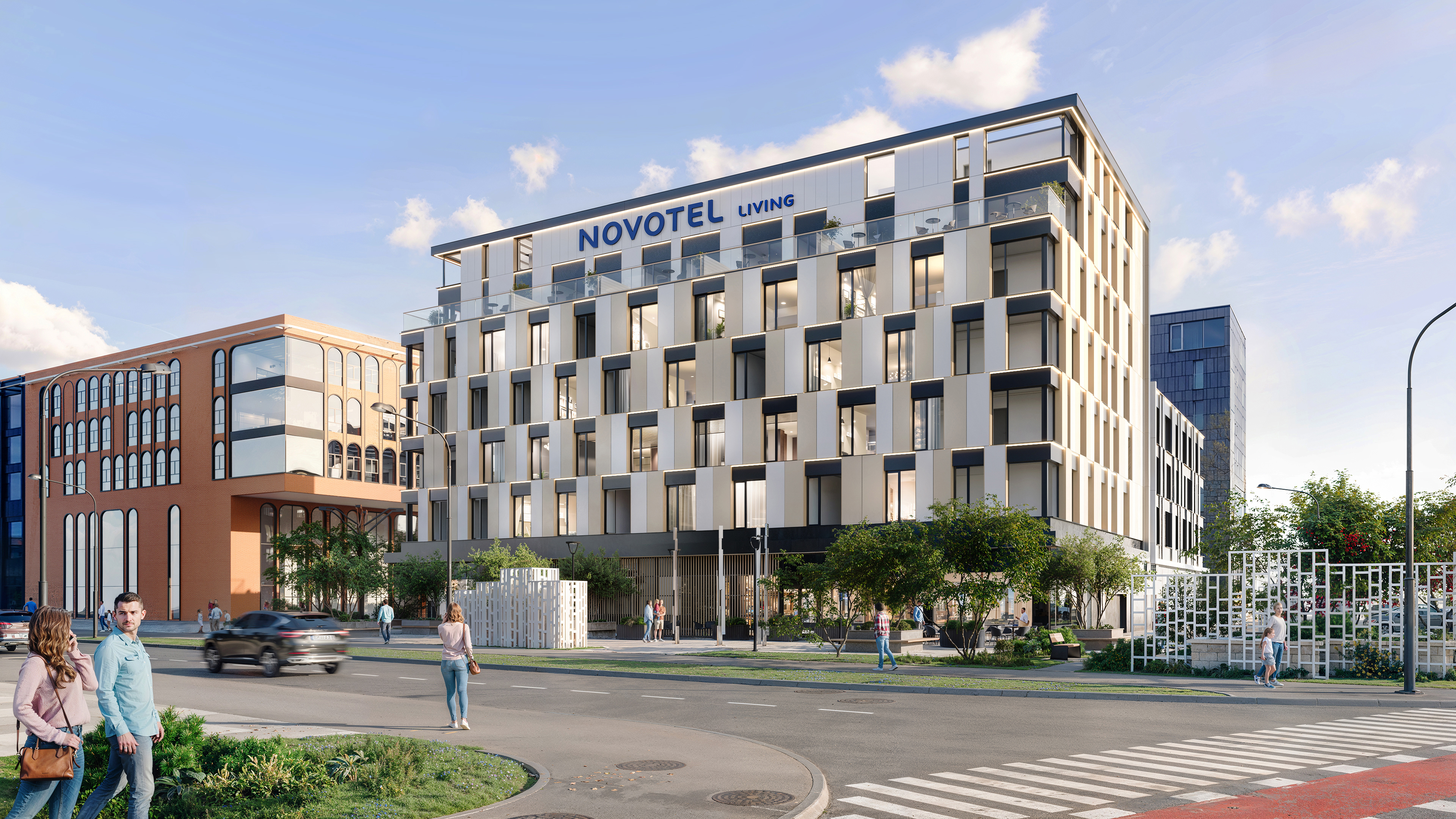
The first thing to mention about the project is its location. The new six-story Novotel Living building grows along Poordi Street, between the Port of Tallinn and the Old Town.
Behind the residential offering is a building featuring shared spaces, including a restaurant, a gym, quiet work lounges, and a green courtyard. Thoughtful design also extends below ground, where two floors are devoted to technical rooms and parking.
The architectural approach respects its surroundings, while signaling forward-thinking urban integration—an area where Estmak Capital has already proven its strengths.
Commercial Spaces at Novotel Living
While guests and residents will occupy the upper floors, the ground level will serve a different purpose. The Poordi-facing frontage blends neatly into the wider pedestrian flow, and it’s here that the project includes commercial units suitable for cafés, showrooms, service points, and small-scale retailers.
These aren’t decorative additions; they’re built into ensure the building becomes a part of the neighborhood’s everyday rhythm. A few units have already been confirmed, while a limited number of commercial spaces with excellent visibility remain available. You’ll find full information through https://novotel.estmakcapital.ee/en/.
Impact on the Local Hospitality and Commercial Real Estate Market
Flexible living and hybrid accommodation models aren't just reinventing how we stay —they're also changing how cities organize activity and foot traffic. In spaces like Novotel Living, real estate becomes something more elastic: a combination of home, hotel, workspace, and urban meeting point.
For investors, these kinds of developments offer broader diversification, with income sources from both the hospitality sector and commercial leases. For entrepreneurs, they offer direct access to footfall from international guests while still engaging with local communities. And for city planners, buildings like this one fit into a wider vision for denser, sustainable, and multipurpose areas that can adapt to economic and social shifts.
Conclusion
With Novotel Living, Estmak Capital is drawing from global patterns and applying them with local clarity, creating a format that suits the evolving realities of urban life. It’s not just the first of its kind in the Baltic states — it’s also part of a broader reimagining of Tallinn’s hospitality and commercial infrastructure.
In a city growing more international by the year, Novotel Living brings with it a new rhythm of city life — one that’s longer, more flexible, and ultimately, more human.


